鈥婽he purpose of these studies is to determine the usability of urban air mobility (UAM) vehicles in the emergency response to natural disasters and the ideal locations for their take-off and landing sites to occur, consistent with the Center's Theme 2. UAM involves aerial vehicles, mostly operated autonomously, which can complete short flights around urban areas, although their applications are expanding to rural operations as well. While initially designed to support advanced transportation mobility, these vehicles could offer numerous advantages in the emergency response to natural disasters. Through a series of four studies with over 2,000 total participants, quantitative and qualitative methods will be used to identify UAM vehicles' usability in response to natural disasters. The studies will examine the types of natural disasters and types of missions where UAM could be considered usable, along with the creation of a valid scale to determine vertiport usability. Interviews will also be conducted to provide qualitative insights to complement the quantitative findings.
Project Details
鈥婭n this proposed series of four studies, our overall purpose will be to determine the usability of urban air mobility in the emergency response to natural disasters. As the concepts of urban air mobility move closer to reality, these mostly autonomous aerial vehicles may provide valuable contributions to our response after natural disasters. However, little prior research has examined the types of natural disasters, types of missions, or locations where UAM could be deployed in the emergency response. The first objective of this research will be to assess the usability of UAM based on the type of natural disaster and type of mission. Following this, the research will develop a valid scale to measure possible locations where UAM operations could be conducted following a natural disaster, such as city parks, building rooftops, or existing helipads. The final objective of this study will be to gather qualitative data through interviews to complement the quantitative findings and offer more significant insights and explanations as to the usability of UAM in response to natural disasters.
Research Team
Principal Investigators
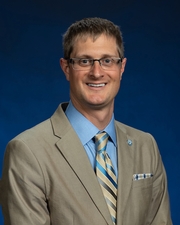
Scott Richard Winter
Associate Professor and Associate Dean
- School of Graduate Studies (SGS)
- Daytona College of Aviation
CO-Investigators