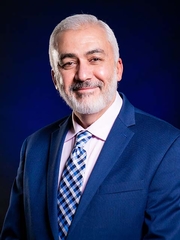
The vision of the Prescott College of Arts & Sciences is to turn out well-rounded, self-reliant, independent and critically thinking graduates who will positively influence the community, country and world.
In commitment to that vision, our mission is to graduate students who are professional and industry-driven. We focus on student success by offering high-level access to faculty mentoring, innovative teaching methods and transformational learning opportunities that empower students to achieve high goals.
These experiences and opportunities fortify our values, which include the acquisition of knowledge, open communication, diversity and inclusion, cutting-edge research, a passion for teaching and life balance.
Our faculty engage in professional consultation and scholarly activities that inform their teaching and their discipline while enhancing the learning opportunities for our students.
Our industry and real-world-inspired courses build on the foundations of critical thinking, quantitative reasoning, information literacy, communication and scientific and cultural literacy, complemented by opportunities to gain practical experience in your chosen field through experiential learning.
Our academic degree programs emphasize applied studies that implement state-of-the-art curricula to educate students for long-term success in their professions.
Explore living systems through cellular biology, physiology and ecology. Focus on how biological processes impact environments, health and aerospace contexts. Build a scientific foundation that supports research, biotechnology, environmental work or medical pathways.
Investigate celestial objects and cosmic systems through observation, physics and data analysis. Work with telescopes and imaging tools to study stellar evolution, planetary motion and galactic structure while developing scientific reasoning used in research and exploration.
Translate complex datasets into actionable insight. You’ll develop expertise in programming, statistics and visualization to extract meaning from information and support evidence-based decisions across business, engineering and aviation sectors.
Explore the science of evidence through DNA analysis, tissue sampling and crime-scene investigation. You’ll gain hands-on experience in advanced biology and forensics labs while studying the legal and ethical standards that guide evidence handling and reporting.
Study how human thoughts, emotions and behaviors connect with the law and criminal justice system. Explore the science of psychology — how people think, learn and make decisions — and apply it to real-world issues like investigations, trials and corrections.
Explore cognitive, physical and organizational factors that influence performance. You’ll study perception, decision making and system design to enhance human efficiency and safety.
Focus on how psychology supports workplace effectiveness. You’ll study motivation, leadership, assessment and organizational behavior to apply evidence-based approaches that improve performance and employee well-being.
Industrial-Organizational Psychology program photo
Explore how simulation and design create interactive experiences. You’ll study modeling, programming and visual effects to build tools used in flight training, research, gaming and aerospace visualization.
Simulation Science, Games and Animation program photo
Explore how matter and energy behave beyond Earth’s atmosphere. Study plasma physics, space weather and cosmic radiation while learning how physical forces influence spacecraft design, planetary systems and the broader universe.
The College of Arts & Sciences conducts basic, applied and
translational research, and engages in creative work, providing mentored
research opportunities for undergraduate and graduate students. In
doing so, we foster unique and innovative disciplinary,
multidisciplinary and interdisciplinary research, approaches and
applications to STEM, social and behavioral sciences, humanities and
simulation sciences.
Labs
Labs
We believe in the importance of hands-on learning in addition to classroom instruction. Our campus has laboratories in every discipline where students have access to state-of-the-art technology that typical undergraduates don't, such as our planetarium, observatory complex, forensic science lab and more.
At the College of Arts & Sciences, students thrive in a dynamic research environment, mentored by faculty who actively publish, secure grants and drive innovation.
College of Arts & Sciences faculty stand apart due to their varied backgrounds and commitment to a comprehensive and global perspective on education. All faculty are adept at specialized learning concepts in our wide range of degree programs.
The College of Arts & Sciences at Embry-Riddle’s Prescott Campus is the academic foundation that drives innovation across aviation, aerospace and emerging industries. By integrating the sciences, mathematics, humanities and social sciences, the college equips students with the critical thinking, analytical and communication skills needed to understand complex challenges and develop meaningful solutions.
Students learn in a collaborative, hands-on environment where theory is applied through research, fieldwork and project-based learning. Small class sizes and close faculty mentorship create opportunities for individualized support and deeper engagement, allowing students to explore their interests while gaining practical experience. Across disciplines, the curriculum emphasizes curiosity, adaptability and real-world impact.
Graduates leave prepared to contribute in fields ranging from science and technology to policy, research and beyond. With a strong academic foundation and a focus on applied learning, they are ready to lead, innovate and make a difference in an increasingly complex and interconnected world.
I chose Embry‑Riddle because I was drawn to the smaller class sizes, faculty involvement and the more tailored undergraduate research opportunities that Embry‑Riddle provides its students. An in-person undergraduate Forensic Psychology program is more difficult to come by than other psychology programs, so it seemed like a good fit for me.”