The Daytona Beach School of Graduate Studies (SGS) in the Daytona Beach College of Aviation at ²ÝݮÊÓƵ’s Daytona Beach Campus envisions becoming a global leader in transformative learning, innovation and academic excellence in aviation and aerospace graduate education and research.
Our mission is to provide a transformative and inclusive graduate educational experience, empowering graduate students through rigorous research, interdisciplinary collaboration and innovative learning experiences. SGS offers some of the most diverse, intellectually versatile and multidisciplinary graduate programs, designed to enable graduates to make a global impact in the aviation and aerospace industry.
Ph.D. in Aviation
As the nation’s first Ph.D. program in Aviation, this prestigious degree advances the frontiers of aviation knowledge through rigorous research and scholarly inquiry. Students in the Ph.D. in Aviation program expand their professional expertise in aviation safety, human factors, operations and interdisciplinary studies to become outstanding scholars in aviation research and education. Graduates emerge as thought leaders, equipped to define and expand the global aviation research landscape.
Master of Science in Aviation (MSAV)
The Master of Science in Aviation program provides an unparalleled opportunity for students to deepen their understanding of the aviation industry while specializing in areas that align with their professional goals. Designed for aspiring experts in flight operations, space operations, aviation safety and uncrewed systems, the program emphasizes technical excellence, analytical skill and leadership development. Through a rigorous curriculum, students acquire the knowledge, discipline and integrity necessary to excel in diverse aviation careers worldwide.
Master of Science in Uncrewed Systems (MSUS)
The Master of Science in Uncrewed Systems program places students at the forefront of one of the fastest-evolving technological fields - uncrewed and autonomous systems. Integrating policy, operations and systems management, the program prepares graduates to lead in industries where autonomy and innovation converge. Students gain the strategic and technical expertise necessary to advance the integration of uncrewed systems in areas such as defense, logistics, agriculture and infrastructure, positioning them as leaders in this rapidly evolving discipline.
Master of Science in Occupation Safety Management (MSOSM)
The Master of Science in Occupation Safety Management program prepares students to become leaders in safety, health, and environmental management across multiple industries, including aviation, manufacturing, military and government sectors. Through advanced coursework in risk assessment, accident prevention and safety culture development, students gain the expertise to design and implement strategies that safeguard people, systems and operations. Graduates are well-positioned to pursue roles as certified safety professionals and advocates for organizational excellence and continuous improvement.
Master of Science in Space Operations (MSSO)
The Master of Science in Space Operations program addresses the growing demand for professionals with advanced expertise in space mission operations and management. Students explore topics in mission design, orbital mechanics and space research, preparing for dynamic careers within both the commercial and government space sectors. The program serves both current professionals seeking advancement and recent graduates aspiring to join the next generation of space operations experts.
Degrees and Programs
Study the principles that connect flight operations, safety, management and technology across the aviation industry. You’ll analyze systems and strategies that shape air transport and prepare to lead advancements in an evolving global aerospace environment.
Explore how organizations build safer workplaces. You’ll study hazard recognition, compliance and leadership while learning how to create safety programs that reduce risk and strengthen organizational performance.
Where flight meets the frontier. Study orbital mechanics, mission design and space systems management. You’ll learn how spacecraft are planned, launched and supported and how operations teams coordinate payloads, communications and safety for government, commercial and research missions.
Study the systems and software that guide uncrewed operations. You’ll explore autonomy, human-machine teaming and system design to prepare for work in aviation, defense and research environments.
At the College of Aviation, students thrive in a dynamic research environment, mentored by faculty who actively publish, secure grants and drive innovation.
Faculty at the College of Aviation also stand apart due to their diverse backgrounds and commitment to a comprehensive and global perspective on education, and all of them are adept at specialized learning concepts in our wide range of degree programs.
Courses like Human Factors, Payload Integration, Programming and Spaceflight Operations directly shaped my work at Zero-G. Aviation classes gave me insight into FAA regulations, improving [my] operational decision-making.”
Shafali “Shay” Bhardwaj (’21, ’25), B.S. Space Operations, M.S. Aviation
SGS continues to expand opportunities for students through innovative 4+1 accelerated programs in collaboration with Elizabeth City State University and Embry-Riddle’s Prescott Campus. These pathways allow qualified undergraduates to earn both a bachelor’s and master’s degree in as little as five years, including the M.S. in Aviation, M.S. in Space Operations and M.S. in Uncrewed Systems. Students gain early access to graduate-level research, interdisciplinary mentorship and Embry-Riddle’s extensive professional network. This collaboration highlights our commitment to academic excellence, innovation and cross-campus collaboration, preparing students to lead in the aviation, aerospace and emerging technology sectors. Through these accelerated programs, SGS reaffirms its dedication to providing a seamless path for ambitious learners who want to turn their education into leadership, discovery and innovation.
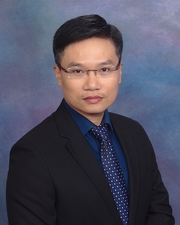
Dr. Gregory Woo
Division Chief, Aviation Systems Engineering, US DOT/Volpe Center
Dr. Gregory Woo manages the division at the U.S. DOT Volpe Center where he leads a diverse staff of engineers, data analysts, program analysts and aviation safety experts who work to ensure the safety and efficient implementation of updates and changes to our nation’s air traffic control systems. He has more than 30 years of broad experience encompassing data center management, information technology and network management, risk management, and leadership of technical research and new product development programs. He has led a wide variety of projects at the Volpe Center ranging from Air Traffic Control systems engineering and acquisition management projects, to risk management and safety assessment exercises, to the testing of weather instrumentation and navigation technologies for low-visibility operations in the airport terminal environment. The Aviation Systems Engineering division also provides safety risk analysis; safety risk management; complex data analysis, modeling, and simulation; and systems engineering support services for new aviation-related technologies and emerging aviation transportation concepts including Unmanned Aircraft Systems (UAS) and Urban Air Mobility (UAM).
Woo is a volunteer member of the FAA’s New England Safety Team, serving as a safety counselor and stage check pilot in the general aviation industry. He holds an Airline Transport Pilot certificate for multi-engine aircraft and is type-rated in the Boeing 737NG. He also holds an FAA Remote Pilot certificate. Woo is an active flight instructor, training general aviation pilots to safely operate technically advanced aircraft with advanced automation and flight management systems. Woo also serves as a member of the Unmanned Aircraft Safety Team (UAST) supporting the uncontrolled flight risk identification and mitigation workgroup. He is an active participant on the General Aviation Joint Steering Committee’s (GAJSC) Safety Analysis Team (SAT). He is keenly interested in highly automated aircraft, infrastructure requirements for autonomous aircraft operations and the impact of Urban Air Mobility (UAM) on our air traffic management systems.
Woo is a Senior Member of the Institute of Electrical and Electronics Engineers (IEEE). He has a bachelor of science degree in electrical engineering from Yale University, a master’s degree in organizational management and development from Fielding Graduate University, and a doctorate from Embry‑Riddle Aeronautical University with a focus on aviation safety, safety management systems and human factors. His dissertation examined the limits of human performance in the visual detection of small unmanned aircraft. He was awarded the 2018 Stanley N. Roscoe Award by the Aerospace Human Factors Association for best dissertation on a human factors-related research topic.
Dr. Andres Zellweger
Dr. Zellweger has an extensive background in aviation system engineering and design, research and development (R&D), operations research, system acquisition, R&D management and program management. Dr. Zellweger possesses strong academic credentials and has published and lectured extensively on topics related to aviation system research, design and development.
He earned a Ph.D. (1971) in computer science with a minor in cognitive psychology from the Department of Applied Mathematics at Harvard. The training in computer science and cognitive psychology provided him with valuable tools to understand the complex human-machine systems that form the basis for modern aviation systems.
Dr. Zellweger has been active in the development of advanced ATM concepts, especially those that involve higher levels of automation/autonomy and long term Trajectory Based Operations.
In the 1990s, Dr. Zellweger was Director of the Federal Aviation Administration (FAA) Office of Aviation Research. He was responsible for FAA R&D Policy, served as the FAA's spokesperson for research and was the Executive Director of the FAA's Research, Engineering and Development Advisory Committee.
In 1997 Dr. Zellweger was appointed Associate Provost for Graduate Programs and Research at Embry‑Riddle Aeronautical University, following a 25-year career with the FAA. He also has valuable aerospace industry experience, having spent two years in the late 1980's as Chief Technology Officer in a 1,000 person aerospace company.
From June, 2001 to December, 2006, Dr. Zellweger was on an Intergovernmental Personnel Assignment from Embry‑Riddle University to NASA headquarters. At NASA, he served as Special Assistant for Aviation to the Associate Administrator for Aerospace Technology and was a the founding member of the Joint Planning and Development Office. He is currently retired.
He received the Department of Transportation Silver Medal and is an AIAA Fellow.
Dr. Bruce Holmes
Bruce is a five-decade veteran of aviation operations, research and development, and disruptive innovation in aeronautics.
His background includes government and industry roles in research, operations and executive leadership, working at NASA, in the on-demand air carrier world, with aviation software startups and on the U.S. NextGen founding team. In addition to his role as a Director for Alaka’i Technologies, he is a Vice President with SmartSky Networks, which is launching a unique 4G LTE aviation connectivity solution and apps development platform, creating the Internet of Things that Fly.
He has published over one hundred technical papers, received seven patents, been honored with numerous NASA medals and professional society awards, including the FAA Wright Brothers Master Pilot Award, recognizing 50 years of safe flying. He is a Fellow of the AIAA and the Royal Aeronautical Establishment.