At the Daytona Beach College of Engineering, we’re preparing the next generation of engineers to lead, innovate and transform the aerospace industry. With world-class faculty, a low student-to-faculty ratio and a strong student focus, our learners gain personalized mentorship and hands-on experience that fuel success.
Through experiential learning and undergraduate research opportunities, students turn theory into practice — developing sustainable systems, exploring autonomous flight and building spacecraft technology. Ambitious and career-driven, they pursue internships, co-ops and industry partnerships that open doors to rewarding careers.
With a strong job market outlook and high placement rates, graduates of the College of Engineering are in demand across aerospace, defense, energy and emerging technology sectors. Outside the classroom, students excel in clubs and competitions like Design, Build, Fly and RobotX, gaining skills that make them innovators and leaders worldwide.
At Embry-Riddle, engineering is a launchpad for global impact.
At Embry-Riddle, we are proud to offer a diverse range of engineering programs designed to meet the demands of today’s rapidly evolving industries. Each program provides hands-on learning, innovative research opportunities and a curriculum designed to launch your career in engineering and beyond.
Explore flight and space systems through aerodynamics, propulsion, structures and controls. Apply engineering methods in labs, design projects that advance aircraft performance and contribute to the future of space exploration.
Study how infrastructure is planned, designed and built. Explore structural analysis, construction methods and environmental considerations. You’ll learn how engineering decisions shape transportation systems, public works and community development.
Where hardware meets software in aerospace contexts. You’ll study digital systems, embedded programming and electronics while developing the technical knowledge needed to design complex systems integral to aviation, uncrewed vehicles and space applications.
Delve into computing theory, algorithms and software development in a high-tech environment. You’ll build foundational programming skills, tackle challenging problems and develop solutions that power aerospace, defense and global technology industries.
Bridge electrical systems and computing design at an advanced level. You’ll explore systems-level integration, signal processing and hardware/software interplay to lead design efforts in aerospace, defense and technology enterprises.
Investigate how electrical systems power and control modern aerospace vehicles and infrastructure. You’ll study circuit theory, electromagnetics and control systems while developing technical knowledge applicable in aviation, industry and research.
Pursue the highest level of research and innovation in computing and electronics. You’ll engage in advanced study and investigation, shaping new technologies and contributing to academic or industry leadership in aerospace systems and software.
Electrical Engineering & Computer Science program photo
Study how motion, energy and materials shape the design of machines and structures. You’ll apply theory to projects that improve aircraft, spacecraft and advanced technologies used across the aerospace industry.
Study how complex software systems are designed, built and maintained. You’ll gain hands-on experience developing secure, high-performance applications that support aviation, aerospace and technology industries.
Focus on how complex projects are planned, built and maintained. Study modeling, integration and process improvement to understand how large engineering systems achieve reliability, efficiency and mission success.
The Daytona Beach College of Engineering is a leader in research innovation, advancing knowledge that shapes the aerospace industry and beyond. Our faculty and students pursue basic, applied and translational research that transforms ideas into real-world solutions.
With a focus on mentored undergraduate and graduate research, interdisciplinary collaboration and industry partnerships, we cultivate an environment of creativity and impact — preparing engineers who shape the future through innovation and ingenuity.
Labs
Labs
Our labs and facilities offer dynamic, hands-on environments where students design, build and test innovative solutions in aerospace, mechanical, civil, electrical and computer engineering. From concept to creation, these spaces empower students to apply classroom knowledge.
Our students thrive in a dynamic research environment, mentored by world-class faculty who pioneer discoveries, secure major grants and drive innovation in aerospace and beyond.
Our faculty stand apart through their diverse expertise, industry experience and dedication to student-focused learning. All faculty integrate cutting-edge research and real-world application into their teaching, preparing students for success.
To be a preeminent engineering college recognized internationally for excellence in education and leadership in aerospace and aviation research.
Mission
Prepare students for successful careers as leaders, innovators and entrepreneurs in aerospace and related engineering fields.
Advance engineering through collaborative research.
Serve society and the engineering profession from our global perspective, teaching the value of integrity, social responsibility and a commitment to service.
Values
The Daytona Beach College of Engineering embraces the diversity of ideas and backgrounds in faculty, students, staff and administration. We are committed to individual and organizational efforts to maintain an inclusive and supportive environment embodying respect, dignity, fairness, empathy and equality.
In recognition of the University’s emphasis on research, we are committed to advancing the frontier of knowledge and the incorporation of discovery into our teaching and practice.
As part of an aeronautical university, the College of Engineering plays an important role in support of the aerospace and aviation industry. Our partnerships and research initiatives with industry provide a talented and skilled workforce and contribute to the development of new technologies.
As a historically undergraduate institution, we value excellence in education and promote research and practice in pedagogy. We consider internships and research indispensable parts of engineering education and work with industry and government to support this paradigm.
As members of the larger engineering community and responsible citizens of the world, we educate our students to be skilled and innovative engineers and research professionals, while developing solutions to this century’s Grand Challenges.
Some students choose a double major. Common examples include Aerospace Engineering and Aeronautical Science. Electrical Engineering/Computer Engineering often show up as double majors. In any of these examples, it will require additional time to complete the requirements of both degrees.
Embry-Riddle engineering faculty are among the best teachers on Campus. They come here because they want to teach. Research is not their primary focus. Unlike many other universities, professors — not graduate students — teach all the engineering and math courses. Engineering courses are relatively small (most have less than 30 students) and many have hands-on laboratories so students have an active role in learning. There is plenty of tutoring available from upperclassmen. Professors also have at least 10 hours per week of office hours devoted solely to helping students with assignments or other problems. Advising is taken very seriously at Embry-Riddle. Professors typically contact their advisees multiple times each semester to make sure they are doing well in their classes and are happy with their education as it relates to their future goals.
Many of our engineering students are also in Air Force or Army ROTC. About one fourth of engineering students are in an ROTC program. We're considered an ROTC friendly environment. However, completing the requirements for ROTC on top of a rigorous Engineering Degree Program is challenging. It appears that time management may be the most important skill in this endeavor.
The fact that Embry-Riddle is a small school with relatively small class sizes means that students have much more face time with their instructors than they would at larger institutions. The faculty is dedicated to helping students succeed, which means they are willing to work with students during their office hours if they are having difficulty grasping the course material. Embry-Riddle also offers tutor labs that allow students additional opportunities to improve their class work.
²ÝݮÊÓƵ has a reputation for producing graduates that are ready to "hit the ground running" in the engineering jobs they obtain. Industry representatives are very satisfied with our hands-on curriculum which allows students to practice and verify theoretical methods. Our engineering curriculum also emphasizes development of communication skills, while many Engineering Degree Programs do not. These skills also prove invaluable in postgraduate work.
Electrical engineers are the designers of a broad range of electronic hardware that includes embedded systems, control systems, communication systems, power systems, and analog and digital electronics. Computer engineers focus on the hardware and software of computer systems and embedded systems. Software Engineers learn how to design, develop, and maintain the software for real-time, embedded, and safety critical systems.
Between them, these three disciplines span the space between hardware-centered focus (Electrical Engineering), computer hardware and software focus (Computer Engineering) and software focus (Software Engineering).
Both co-op and internship opportunities can help students gain employment once they graduate. You can list your internship as actual career experience on your resume and talk about what you learned during interviews. More importantly, cooperative educational experiences bring relevance to your education as you attend school. Multiple co-op and internship opportunities exist for Embry-Riddle engineering students.
Project-based learning and peer engagement are enabled through a large variety of student organizations and competition groups in the College of Engineering. While students are strongly encouraged to participate in some of the many diverse organizations offered on the Daytona Beach Campus, including organizations dedicated to service, socialization and artistic endeavors, the College of Engineering faculty and the Dean of the College provide both mentorship and financial support to the following organizations:
Competition Teams
Undergraduate students in the aeronautics track of the Aerospace Engineering bachelor’s degree program participate in this competition as part of the two-semester spacecraft design class. During the 2012-2013 academic year, Embry-Riddle students, under the leadership of Dr. Perrell, took first place at the competition in San Diego, California, for their two-stage reusable launch vehicle design.
.
Students around the nation research, analyze, design and construct a canoe made out of concrete for the American Society of Civil Engineers (ASCE) Concrete Canoe competition. The Embry-Riddle student chapter of the ASCE participates in this competition annually, with funding and support from the Department of Civil Engineering. The 2014 “Miracle” canoe was 16 feet long and 300 pounds, and it took 780 hours to complete.
.
An interdisciplinary group of students with funding and technical support from the Robotics Association at Embry-Riddle (RAER) participates annually in the Intelligent Ground Vehicle Competition (IGVC) sponsored by the Association for Unmanned Vehicle Systems International (AUVSI). Recent Embry-Riddle entries included Alvin, which won fourth in design and fifth in the auto-nav competition, and Molle, a 30-pound vehicle that won first in the design competition.
.
A covert operative must infiltrate a secure compound using an autonomous aerial drone, which must locate a flash drive, retrieve it and replace it with a decoy, all while remaining undetected, in the International Aerial Robotics Competition (IARC). An interdisciplinary team of students supported by the Robotics Association at Embry-Riddle (RAER) competes annually. Recent entries have involved a quadrotor with an intelligent sub-vehicle.
.
The Maritime RobotX Challenge is co-sponsored by the Office of Naval Research (ONR) and the Association for Unmanned Vehicle Systems International (AUVSI) Foundation and entails the development and demonstration of an autonomous surface vehicle (ASV).
.
The Blackfinn underwater vehicle performs complex autonomous missions in a competition for college and high school students. The Robotics Association at Embry-Riddle (RAER) participates in this competition annually, in addition to providing support and mentoring for teams of middle or high school students participating in the event.
.
Students are engaged in systems engineering for a total solution to a challenging mission, requiring the design, fabrication and demonstration of a system capable of completing a specific autonomous aerial operation in this competition. The Robotics Association at Embry-Riddle (RAER) annually sends at least one team to this challenging competition, often claiming top honors.
.
Sixteen North American universities are challenged to redesign a Chevrolet Camaro into a hybrid-electric car that will reduce environmental impact while maintaining the muscle and performance expected from this iconic American car. This will be the third time Embry-Riddle has been invited to participate in North America’s premier collegiate automotive engineering competition.
A 24-hour programming competition, sponsored by the student branch of the Institute of Electrical and Electronics Engineers (IEEE) and the Department of Electrical Engineering and Computer Science, challenges teams of three students to quickly, correctly and optimally solve programming challenges designed by industry leaders and academic experts around the world.
.
A team of students builds a ground robot to solve a specific challenge (based on playing a game or a real-world scenario) in a competition against other undergraduate-only teams at the annual Southeastern Regional Conference of the Institute of Electrical and Electronics Engineers (IEEE). In recent years, this competition has been part of the capstone design experience for undergraduates in the Department of Electrical Engineering and Computer Science.
.
Undergraduate aerospace engineering students in the propulsion track took first place in this competition in 2013, when the challenge was to design an improved engine for the Northrop Grumman RQ4 Global Hawk unmanned air vehicle that would provide a ceiling increase to 70,000 feet at Mach 0.6 while lowering overall weight and fuel consumption.
Students design and build a remote-controlled or autonomous excavator that can collect and deposit a minimum of 10 kilograms of lunar simulant within 15 minutes. The complexities of the challenge include the abrasive characteristics of the lunar simulant, the weight and size limitations of the lunabot, and the ability to control the lunabot from a remote-control center. This competition is sponsored by the Robotics Association at Embry-Riddle (RAER).
.
Graduate and undergraduate students build a single-seat hybrid electric vehicle to compete in autocross, endurance events, an acceleration test and judging of car design and marketing presentations on a fixed amount of fuel. In 2014, the team collected third place overall, as well as second place for innovation and several other awards.
.
An all-female collegiate team that designs, builds and drives a four-wheel, single-seat, off-road vehicle. The team has a dedicated workspace in the High-Performance Vehicles Laboratory and trains all participants in the end-to-end engineering process, including design, model, build and test (actually driving the vehicle).
.
Honor Societies
Eta Kappa Nu, the newest honor society at Embry-Riddle, is the student honor society of the Institute of Electrical and Electronics Engineers (IEEE) and is dedicated to encouraging and recognizing excellence in IEEE-designated fields of interest.
.
The honor society for aerospace engineering, Sigma Gamma Tau, identifies and recognizes achievement and excellence in the field of aerospace.
.
Tau Beta Pi, the national all-engineering honor society, recognizes juniors and seniors enrolled in engineering programs for their academic achievement and provides them the opportunity to grow in an engineering environment.
.
Upsilon Pi Epsilon recognizes academic excellence in computing and information disciplines.
.
Professional Societies
Undergraduate students in the aeronautics track of the Aerospace Engineering bachelor’s degree program participate in this competition as part of the two-semester spacecraft design class.
.
Students around the nation research, analyze, design and construct a canoe made out of concrete for the American Society of Civil Engineers (ASCE) Concrete Canoe competition. The Embry-Riddle student chapter of the ASCE participates in this competition annually, with funding and support from the Department of Civil Engineering.
.
Industry tours, guest speakers, projects, scholarships and leadership seminars are offered through the student chapter of the American Society of Mechanical Engineers (ASME).
.
The mission of the Biomedical Engineering Society (BMES) Student Chapter at Embry-Riddle is to build and support the biomedical engineering community in ²ÝݮÊÓƵ and local community with activities designed to communicate recent advances, discoveries and inventions; promote education and professional development; and integrate the perspectives of the academic, medical, governmental and business sectors. The society will involve the research and development of biomedical and bioengineering technologies. BMES Embry-Riddle shall introduce students to the profession of biomedical engineering, as it relates to other engineering disciplines and to the professional role of BMES Embry-Riddle. It will prepare students to enter into the profession of biomedical engineering; expand student knowledge of specific tools and techniques used in biomedical engineering and related fields; develop leadership abilities and professional qualities among student members; and provide an environment for social interaction and exchange of ideas between all levels of undergraduate students, graduate students and faculty.
.
Students in the student chapter of the Institute of Electrical and Electronic Engineers (IEEE) participate in the IEEE Hardware competition and eXtreme Programming competition, in addition to developing articulating artificial limbs and novel antenna designs.
.
More than 40 active members of the National Society of Black Engineers (NSBE) Embry-Riddle chapter attended the annual National Convention in Nashville, Tennessee, during the 2013-2014 academic year. Over the course of this year, they raised money to support St. Jude, hosted a glider competition on-campus for Engineers Week and took second place at the Boeing Glider Competition.
.
The Embry-Riddle chapter of the Society of Hispanic Professional Engineers (SHPE) is relatively new on campus and fills the parent organization’s mission of changing lives by empowering the Hispanic community to realize its fullest potential and impact the world through STEM awareness, access, support and development.
.
This student-led organization is dedicated to the equal opportunity of women in the engineering workplace and promoting the study of engineering. They focus largely on outreach to girls in the local community and additionally provide resources to the Women’s Baja SAE team.
.
Technical Interest Organizations
The 3D Printing Club introduces students to different types of additive manufacturing technologies, utilizing a desktop 3D printer to complete student-led projects. The organization also helps members improve computer-aided design (CAD) skills.
.
The AI club at Embry-Riddle helps students from a variety of backgrounds develop a practical understanding of computational intelligence and work together to apply programming techniques to games, robotics and other AI-related projects.
.
Education in the design and development of renewable technology is carried out by the Clean Energy Club. A primary part of their mission is to provide clean-water sources for underdeveloped parts of the world, most notably the long-running Project Haiti.
.
Embry-Riddle Future Explorers and Developers (ERFSEDS) focuses on design, construction, testing and flight of full-vehicle integration. The club competes in the Intercollegiate Rocket Engineering Competition (IREC) annually, with several top placements in the competition. Here, students learn how high-power rockets are made and are prepared for real-world engineering design challenges through the use of Design Reviews. The organization prides itself on the research of solid rocket motors, 3D-printed fuel grains and high-performance rockets. Students currently are working on modeling and simulating a World-Record-Breaking rocket that should reach close to 90,000 feet, as well as preparing a UAV-deploying rocket for the next IREC competition, mixing solid propellant rocket motors and researching new manufacturing methods for composite materials.
.
Scientific payloads that fly on rockets (launched by ERFSEDS) are developed in the Engineering Design Club, which focuses on developing better engineering practices for members through the development of real projects.
The ExO student organization exists to provide an organized structure for students to meet fellow peers interested in exoskeleton design and human performance; to expose students to successful and exciting careers working with defense technologies through on- and off-campus activities; to promote student body awareness of emerging human augmentation technologies; to provide the means for students to work with, investigate, manipulate, design and fabricate human augmentation technology to increase the effectiveness and survivability of humans in extreme environments (such as combat); to promote safety, provide instruction and promote the development of applied research skills; and to gather interested members together in a social setting.
.
The Experimental Rocket Propulsion Lab (ERPL) is a student club that offers its members the chance to gain vast amounts of experience on different rocket propulsion systems, landing systems and simulations. The Divisions offered by ERPL include a Liquid Rocket Engines Division, Hybrid Rocket Engine and Simulations.
.
The Game Development Club teaches programming and 3D modeling. They also participate in multiple game jams throughout the semester.
.
Groups of students propose to participate in NASA’s Undergraduate Microgravity Program by developing proposals investigating the effects of microgravity on specific engines, spacecraft and other applications.
.
The Remote Control Auto Club is a newly established student organization at Embry-Riddle Daytona Beach that encourages and explores the hobby of remotely controlled ground vehicles. The purposes of this organization are to educate on remote control systems, train on the functions of remote control systems and create a community of remote control enthusiasts. This club provides the opportunity to students interested and new to the hobby to experience fun and educational activities for a minimal cost and is open to all students regardless of major and interests. The club caters to hobbyists on all levels with activities such as competitive racing and project building in off-road and on-road classes, all while promoting mechanical and electrical engineering and fluids and dynamics. The flagship project of the RC Auto Club is the Speed Car, a high-performance, remote control vehicle capable of 100 mph and more that's designed by the club, built by the club and raced by the club.
The STEM Outreach club focuses on mentoring local students through both outreach and instruction in the areas of science, technology, engineering and math, actively inspiring future generations and strengthening the capabilities of future STEM professionals.
The Boeing Center for Aviation and Aerospace Safety provides research, education and industry engagement to promote global aviation and aerospace safety. The center also proactively identifies and addresses key safety challenges.
The Center for Aerospace Resilient Systems will address cyber threats to safety-critical aero systems and cultivate new areas of development through innovative applications of technologies such as Al and data science and analytics in aero systems.
Together, the College and its research centers drive innovation that shapes the future of aerospace. Collaborative initiatives such as COE/BCAAS seed grants have catalyzed groundbreaking projects — including Dr. Hever Moncayo’s $6.7 million NASA University Leadership Initiative award to enhance Advanced Air Mobility safety and Dr. Jianhua Liu’s partnership with a major aerospace company to advance automatic speech recognition for air traffic communications.
In partnership with CARS, the College also leads a National Science Foundation CyberCorps®: Scholarships for Service program, training the next generation of cybersecurity professionals with expertise in aerospace systems.
ABET
Accreditation of engineering and computing programs ensures that the programs produce graduates who are prepared to meet the expectations of employers, the public or pursue further study in engineering or other fields.
Inc. (formerly the Accreditation Board for Engineering and Technology) is the recognized accrediting agency for college and university programs in applied science, computing, engineering and technology. ABET accreditation is assurance that a college or university program meets the quality standards established by the profession for which it prepares its students. ABET currently accredits some 2,900 programs at more than 600 colleges and universities nationwide.
The Bachelor of Science in Aerospace Engineering is accredited by the of ABET, under the commission’s General Criteria and Program Criteria for Aerospace and Similarly Named Engineering Programs.
The Bachelor of Science in Civil Engineering is accredited by the of ABET, under the commission’s General Criteria and Program Criteria for Civil and Similarly Named Engineering Programs.
The Bachelor of Science in Computer Engineering is accredited by the of ABET, under the commission’s General Criteria and Program Criteria for Electrical, Computer, Communication, Telecommunication(s), and Similarly Named Engineering Programs.
The Bachelor of Science in Computer Science is accredited by the of ABET, under the commission’s General Criteria and Program Criteria for Computer Science, and Similarly Named Computing Programs.
The Bachelor of Science in Electrical Engineering is accredited by the of ABET, under the commission’s General Criteria and Program Criteria for Electrical, Computer, Communication, Telecommunication(s), and Similarly Named Engineering Programs.
The Bachelor of Science in Mechanical Engineering is accredited by the of ABET, under the commission’s General Criteria and Program Criteria for Mechanical and Similarly Named Engineering Programs.
The Bachelor of Science in Software Engineering is accredited by the of ABET, under the commission’s General Criteria and Program Criteria for Software and Similarly Named Engineering Programs.
One component of the accreditation criteria requires each program pursuing accreditation to formulate Program Educational Objectives in consultation with their program-defined constituents. ABET defines Program Educational Objectives as “broad statements that describe what graduates are expected to attain within a few years after graduation.”
Another component of ABET accreditation requires programs specify Student Outcomes, which “describe what students are expected to know and be able to do by the time of graduation. These relate to skills, knowledge and behaviors that students acquire as they progress through the program.”
ABET is committed to Continuous Improvement and all programs must assess and evaluate the extent to which their Student Outcomes are being attained and use the results of these evaluations for the continuous improvement of the program.
ABET requires that each program make available to the public certain information, namely their Program Educational Objectives, their Student Outcomes, their accreditation status and data on their student enrollments and degrees granted. This information is published at the program links provided above.
The Southern Association of Colleges and Schools Commission on Colleges
Embry‑Riddle Aeronautical University is accredited by the (SACSCOC) to award degrees at the associate, baccalaureate, masters, and doctorate levels. Embry‑Riddle Aeronautical University also may offer credentials such as certificates and diplomas at approved degree levels. Questions about the accreditation of Embry‑Riddle Aeronautical University may be directed in writing to the Southern Association of Colleges and Schools Commission on Colleges at 1866 Southern Lane, Decatur, GA, 30033-4097, by calling 404-679-4500, or by using information available on .
Please note that the SACSCOC institutional accreditation extends to all Embry‑Riddle Aeronautical University off-campus instructional sites, including Prescott, and Worldwide with its affiliated locations.
Working in the WiDE Lab, learning from professors and faculty with industry experience, and engaging in an aerospace-focused curriculum created a consistently exciting academic experience and prepared me to begin a career in the field. I continue to reference knowledge gained during the program and frequently connect with fellow NASA Embry-Riddle alumni."
Alora Mazarakis ('20), M.S. Electrical and Computer Engineering
Build What's Next
Step inside Embry-Riddle’s engineering experience where ideas turn into real-world solutions through hands-on projects and advanced labs. See how students develop the skills, mindset and confidence to tackle complex challenges and shape the future.
Every day, our students and faculty are driving engineering innovation. From developing a camera system that was the first student-built project to land on the moon, to advancing networked drone security with using inspiration from nature, their efforts are actively transforming our world.



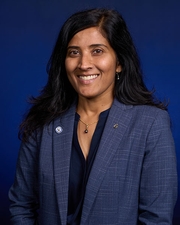

 Working in the WiDE Lab, learning from professors and faculty with industry experience, and engaging in an aerospace-focused curriculum created a consistently exciting academic experience and prepared me to begin a career in the field. I continue to reference knowledge gained during the program and frequently connect with fellow NASA Embry-Riddle alumni." Alora Mazarakis ('20), M.S. Electrical and Computer Engineering


