
Einstein鈥檚 theory of General Relativity offers a remarkable description of gravity as curved space and time. Many of the consequences of this theory have been confirmed, and some are used daily, such as the gravitational redshift effect on GPS satellite atomic clocks. In 2015, the first observation of a gravitational wave from two inspiraling black holes occurred using the gravitational wave observatories as part of the worldwide LIGO-VIRGO collaboration. This discovery won the Nobel prize, and the observations of these events have continued, including a multi-messenger event of two colliding neutron stars.
Project Details
Embry-Riddle Prescott faculty and student researchers are part of the LIGO-VIRGO collaboration and work on aspects of detecting and studying gravitational waves. Faculty and students also study more broadly tests of the foundational principles of General Relativity, such as spacetime symmetries like Lorentz symmetry. These tests include gravitational wave observation but also solar system tests like short-range gravity and lunar laser ranging. One of the long-standing problems in gravity research is the connection between gravity and quantum field theory. Our faculty is actively working on this problem and, in particular, the relation between gravity and electromagnetism. There are both theorists and experimentalists among the faculty at ERAU Prescott. Most faculty receive funding from the National Science Foundation and regularly publish articles in to journals, many with students involved.
Research Team
Principal Investigators
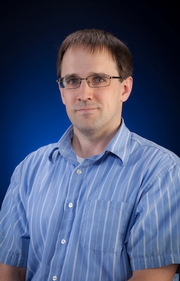
Professor and Program Coordinator
- Physics and Astronomy Department
- Prescott College of Arts & Sciences
CO-Investigators
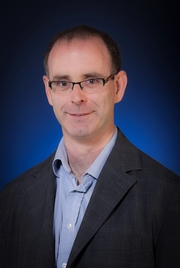
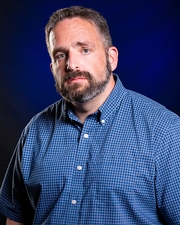
Professor and Chair
- Physics and Astronomy Department
- Prescott College of Arts & Sciences
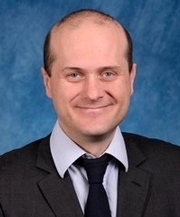
Associate Professor
- Physics and Astronomy Department
- Prescott College of Arts & Sciences